


Product Description
The MediaTek MT6571A/EA is a budget-friendly system-on-chip (SoC) designed to power entry-level smartphones. Featuring a quad-core ARM Cortex-A7 processor, it offers a decent level of performance for everyday smartphone tasks like messaging, browsing, and light app usage. While it’s not designed for heavy multitasking or high-performance gaming, the quad-core configuration offers a better experience than earlier dual-core chips in terms of responsiveness and multitasking.
The inclusion of the Mali-400 MP2 GPU is a highlight for multimedia capabilities, providing basic support for 3D games, video playback, and other graphical tasks. However, its older design means that users won’t get high-end gaming performance or support for the latest graphical standards. Still, for light gaming and multimedia usage, it serves its purpose reasonably well.
The MT6571A/EA’s 4G LTE support is an important feature, as it allows for faster data speeds, which is becoming essential for modern smartphones. With LTE Cat 4 support, users can expect download speeds of up to 150 Mbps and upload speeds of up to 50 Mbps, which is fast enough for streaming, web browsing, and social media usage. Additionally, the chipset’s compatibility with 2G and 3G networks ensures it will work in a wide range of markets.
In terms of camera performance, the MT6571A/EA can handle up to a 13 MP rear camera, which is adequate for capturing images and recording video in standard quality. It also supports 720p video recording, which is fine for general use but falls short for those who want to capture full HD or 4K video.
From a power consumption perspective, the 28nm manufacturing process ensures a balance between performance and battery life. Devices with this chipset can achieve a full day of use on a single charge, making it suitable for users who prioritize longevity over cutting-edge performance.
In conclusion, the MediaTek MT6571A/EA is well-suited for budget smartphones aimed at users who require a solid, everyday experience without needing premium performance. Its combination of a quad-core processor, 4G LTE support, and multimedia capabilities make it a good option for basic mobile tasks and entry-level devices. However, for users who need higher performance, modern camera features, or advanced gaming capabilities, this chipset will be limiting.
Specification
1. CPU Configuration:
Core Architecture: The MediaTek MT6571A/EA is powered by a quad-core ARM Cortex-A7 processor. The Cortex-A7 architecture is known for its energy efficiency, making it ideal for budget devices where battery life is important. While not the most powerful core architecture, it delivers good performance for typical smartphone tasks like web browsing, social media, and light multitasking.
Clock Speed: Each core is clocked at up to 1.3 GHz, providing decent computational power to handle everyday applications. The 1.3 GHz clock speed ensures responsiveness for basic operations like email, web browsing, and messaging apps.
Core Count: The four cores allow for basic multi-tasking performance, which is an improvement over dual-core setups. However, it is still limited compared to more modern octa-core or higher-end chipsets, which may affect the performance in more demanding applications or games.
2. GPU Configuration:
Graphics Processing Unit: The MT6571A/EA integrates the Mali-400 MP2 GPU, a dual-core graphics solution from ARM. While this GPU is now considered quite old by modern standards, it was a reliable choice for budget devices at the time of the chipset’s release.
Graphics Performance: The Mali-400 MP2 GPU can handle basic 3D gaming, video rendering, and other multimedia tasks at standard resolutions (up to 720p). It supports OpenGL ES 2.0, which is sufficient for most apps and light gaming. For more graphically-intensive applications or high-end gaming, however, the GPU may struggle to maintain smooth performance, particularly at higher settings.
Multimedia Support: The GPU is capable of decoding HD video formats such as H.264 and H.263, making it suitable for streaming and local video playback in 720p resolution.
3. Modem & Connectivity:
4G LTE Support: The MT6571A/EA features integrated 4G LTE support with Cat 4 capabilities, offering download speeds of up to 150 Mbps and upload speeds up to 50 Mbps. This provides faster internet access compared to 3G and is essential for a better browsing, video streaming, and app download experience.
2G and 3G Connectivity: In addition to 4G LTE, the chipset supports older 2G (GSM, GPRS, EDGE) and 3G (WCDMA) networks, ensuring that it is compatible with a wide range of global cellular networks. This allows users in regions where 4G is not widely available to still benefit from reliable mobile network connectivity.
Wi-Fi and Bluetooth: The MT6571A/EA supports Wi-Fi 802.11 b/g/n, ensuring stable and fast wireless internet connections for users. It also features Bluetooth 4.0, providing low-power wireless connectivity for accessories, file sharing, and other Bluetooth-based applications.
4. Camera & Multimedia:
Camera Support: The MT6571A/EA supports up to a 13 MP primary camera, which is capable of capturing decent photos and videos for mid-range smartphones. While this is a reasonable feature for budget devices, it lacks some of the advanced camera features found in more expensive chipsets, such as advanced image signal processing or higher frame rates for video capture.
Video Recording: It supports 720p video recording, which is standard for devices at this price point. However, it does not support 1080p or 4K video recording, which means it may fall short for users looking for higher-end video capture capabilities.
Multimedia Support: In terms of multimedia, the chipset supports HD video playback (720p), making it a solid choice for watching videos, streaming content, and playing media. It also includes hardware decoding for popular video formats like H.264, H.263, and MPEG4.
5. Memory & Storage:
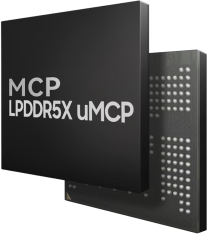
RAM Support: The MT6571A/EA supports LPDDR2 RAM and is commonly paired with 1GB to 2GB of RAM in devices. The 1GB configuration is sufficient for light usage, while 2GB provides more flexibility for running multiple apps simultaneously. However, compared to modern devices with 4GB or more, multitasking can become slower and less responsive as the number of active apps increases.
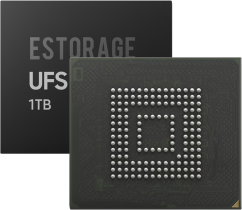
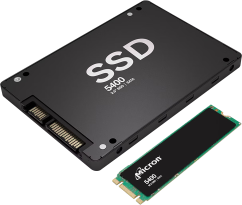
Storage: Devices powered by the MT6571A/EA typically come with 8GB to 16GB of internal storage, with expandable storage options available via microSD cards (up to 64GB). The ability to expand storage helps users manage apps, media files, and other data, compensating for the relatively lower internal storage capacity.
6. Power Efficiency:
Manufacturing Process: The MT6571A/EA is manufactured using a 28nm process, which offers a reasonable balance between performance and power consumption. Although it is less efficient than more modern 14nm or 7nm chips, the 28nm process still provides adequate power efficiency for devices with smaller batteries, contributing to longer battery life.
Power Management: The integrated power management unit (PMU) ensures that the chipset consumes less power when the device is idle or in low-power states. This helps extend battery life in entry-level smartphones, which often have smaller battery capacities.