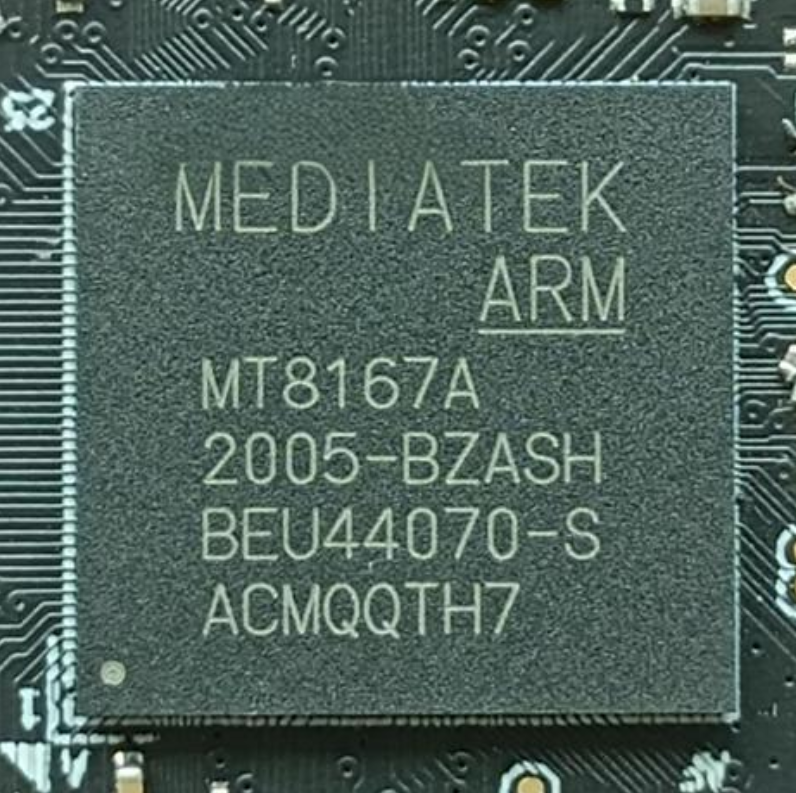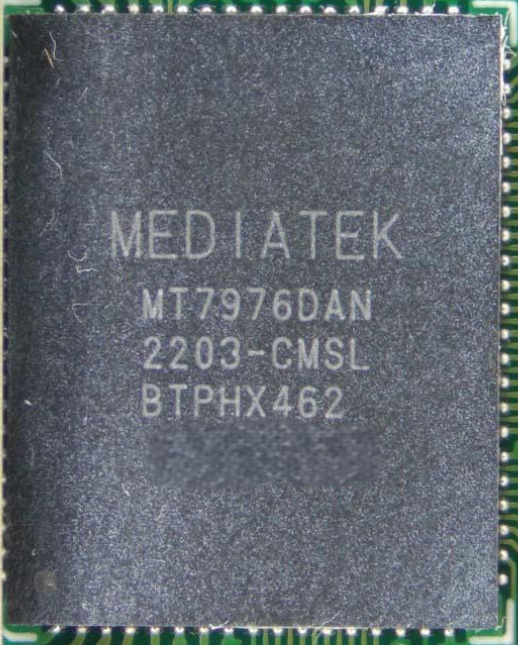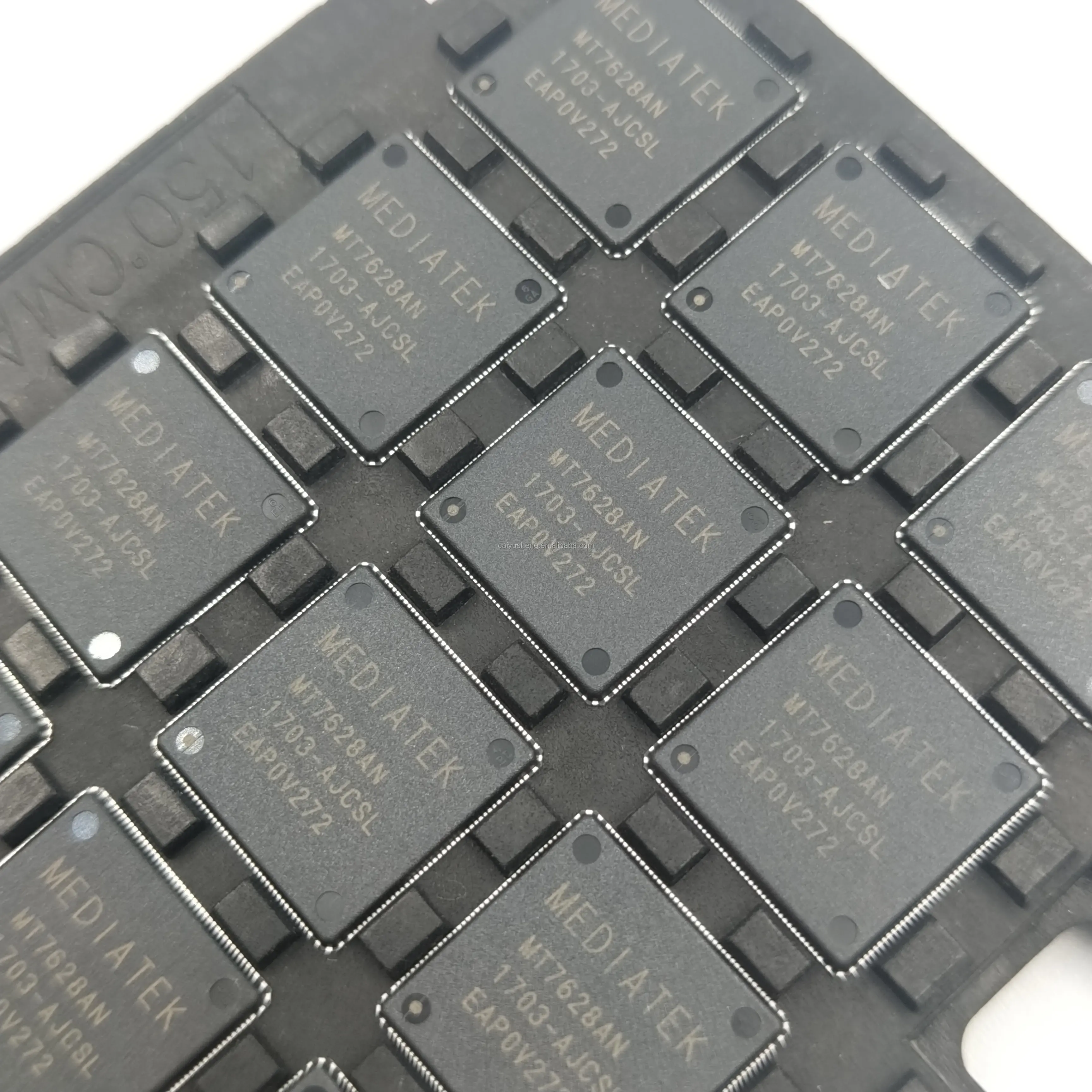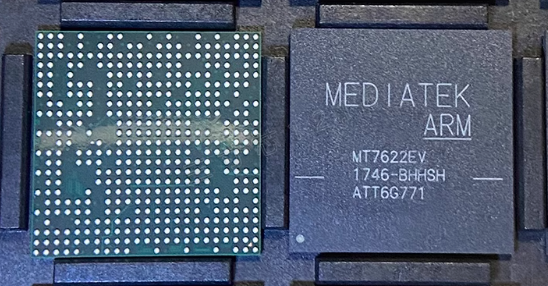



Product Description
The MediaTek MT7686DN/A is a versatile and power-efficient Wi-Fi and Bluetooth System-on-Chip (SoC) designed primarily for IoT (Internet of Things) and smart home applications. The chip integrates multiple wireless communication technologies such as Wi-Fi 802.11ac and Bluetooth 4.0 Low Energy (BLE), as well as a single-core ARM Cortex-M4 processor, all packaged in a small and highly efficient SoC. This makes the MT7686DN/A ideal for a wide range of connected devices, from simple sensor hubs and wearables to more complex smart home appliances.
CPU and Processing Power: At the core of the MT7686DN/A is a single-core ARM Cortex-M4 processor that runs at up to 192 MHz. The ARM Cortex-M4 is a 32-bit processor optimized for low-latency real-time processing, making it well-suited for IoT and embedded applications that require quick response times, such as handling sensor data, controlling actuators, and managing communications. The processor supports the ARMv7-M instruction set architecture, designed to run efficiently in low-power environments. Although the processor is not meant for heavy computing tasks, it is ideal for managing tasks like wireless communication, power management, and peripheral control, which are common in IoT devices.
Wi-Fi Connectivity: One of the standout features of the MT7686DN/A is its support for dual-band Wi-Fi 802.11ac. This allows the chip to operate on both the 2.4 GHz and 5 GHz bands, providing flexibility in network connectivity depending on the application’s range and bandwidth needs. The 802.11ac standard offers faster data rates than the previous 802.11n standard, with up to 433 Mbps achievable on the 5 GHz band, and 150 Mbps on the 2.4 GHz band. This makes the MT7686DN/A ideal for use in connected devices that need reliable and high-speed wireless connections, such as home automation hubs, security cameras, and remote sensors. The chip also supports Wi-Fi Direct, enabling direct device-to-device communication without the need for a router, which can be particularly useful in scenarios where devices are distributed in remote areas or in mesh networks.
Bluetooth Low Energy (BLE): In addition to Wi-Fi, the MT7686DN/A supports Bluetooth 4.0 (Low Energy), a key technology for connecting low-power devices like wearables, fitness trackers, smart lightbulbs, and other peripherals in an energy-efficient manner. Bluetooth Low Energy (BLE) is specifically designed for devices that need to maintain long-lasting connections with minimal energy usage. This feature is essential for IoT applications where frequent communication with other devices or sensors is required but power consumption must be kept low. The MT7686DN/A supports a range of Bluetooth profiles, including Serial Port Profile (SPP) and BLE Peripheral, ensuring compatibility with a wide array of IoT devices and enabling seamless integration.
Power Efficiency: The MT7686DN/A excels in power management, which is one of its most significant advantages for IoT and battery-powered devices. The chip supports several low-power modes, such as Sleep and Deep Sleep, allowing devices to conserve power during periods of inactivity. This is critical for applications like remote monitoring, where the device needs to stay on for long periods without frequent recharging or battery replacement. Additionally, the chip has an integrated Power Management Unit (PMU) that intelligently handles power distribution, ensuring the chip operates as efficiently as possible based on the workload. This ensures that battery-operated IoT devices can maximize their operational time.
Memory and Storage: The MT7686DN/A includes 256 KB of SRAM for running embedded applications and handling short-term data storage needs. This is more than sufficient for typical IoT applications, which often involve simple control logic and sensor data processing. The chip also supports external SPI Flash memory, enabling devices to store larger amounts of data, including application code, logs, and configuration settings. This feature is important for devices that require persistent storage for operational data, firmware, or configuration parameters.
Security and Over-the-Air Updates: Security is a critical consideration for IoT devices, and the MT7686DN/A addresses this with a built-in hardware security engine. The security engine supports secure boot and data encryption, protecting devices from unauthorized access and ensuring secure communication between devices. The chip also supports OTA (Over-the-Air) firmware updates, allowing manufacturers to update devices remotely without requiring physical access. This is particularly valuable for IoT devices that are deployed in the field, as it allows for security patches, bug fixes, and feature enhancements to be delivered remotely.
Connectivity and Interfaces: The MT7686DN/A offers a range of connectivity options, including Ethernet MAC, which allows devices to connect to wired networks when required. This is beneficial for applications where a more stable and reliable connection is needed, such as in industrial or commercial IoT devices. Additionally, the chip includes standard interfaces such as SPI, I2C, and UART, which are commonly used for connecting a wide variety of sensors, actuators, and other external peripherals. It also features GPIO (General Purpose Input/Output) pins, which provide flexibility for developers to interface the chip with various external components.
Conclusion: The MediaTek MT7686DN/A is a highly integrated and power-efficient SoC that brings together dual-band Wi-Fi 802.11ac, Bluetooth Low Energy, and a single-core ARM Cortex-M4 processor to deliver a powerful solution for IoT and smart home applications. Its combination of fast, reliable wireless connectivity, low power consumption, and robust security features makes it well-suited for a wide range of connected devices, from wearables and home automation products to industrial sensors and networked appliances. With comprehensive support for various communication interfaces and an integrated PMU, the MT7686DN/A enables manufacturers to create versatile and efficient IoT devices that can operate for long periods on battery power while maintaining secure, high-performance connectivity.
Specification
CPU:
Processor: ARM Cortex-M4 core running at up to 192 MHz.
Architecture: 32-bit, designed for power-efficient embedded applications, capable of handling simple control tasks, sensor integration, and communication.
Instruction Set: ARMv7-M architecture optimized for low-latency operations and energy efficiency, suited for real-time processing.
Wi-Fi:
Wi-Fi Standard: IEEE 802.11ac (Wi-Fi 5), supporting both 2.4 GHz and 5 GHz frequency bands.
Maximum Data Rate: Up to 433 Mbps on the 5 GHz band and 150 Mbps on the 2.4 GHz band.
Wi-Fi Security: Supports WEP, WPA, and WPA2 for secure wireless communication.
Wi-Fi Direct: Allows for direct device-to-device communication without requiring a router or access point.
Bluetooth:
Bluetooth Version: Bluetooth 4.0 (Low Energy), providing a low-power solution for wireless communication with peripheral devices such as sensors, wearables, and smart home products.
Profiles Supported: BLE Peripheral, Serial Port Profile (SPP), and other Bluetooth Low Energy profiles for a wide variety of IoT use cases.
Memory:
Internal SRAM: 256 KB of SRAM for executing programs and storing temporary data.
External Memory: Supports external SPI Flash memory for application storage and code execution, enabling flexible device configurations.
Connectivity:
Ethernet MAC: Integrated Ethernet Media Access Controller (MAC) for wired network connectivity, useful for IoT applications that require a stable wired network.
SPI, I2C, UART: Standard interfaces for connecting sensors, peripherals, and other external devices.
GPIO: General Purpose Input/Output pins for device control and interaction with the environment.
Power Management:
Low Power Operation: Designed for power-efficient operation, the MT7686DN/A supports various low-power modes, including Sleep and Deep Sleep modes.
Power Management Unit (PMU): The chip integrates a PMU that dynamically adjusts power usage to optimize energy efficiency during idle and active states.
Security:
Hardware Security Engine: Provides secure boot and encryption to protect communication and data storage from unauthorized access.
OTA (Over-the-Air) Updates: Allows devices to receive firmware updates remotely, ensuring they stay secure and up-to-date without requiring physical access.